





Product Overview
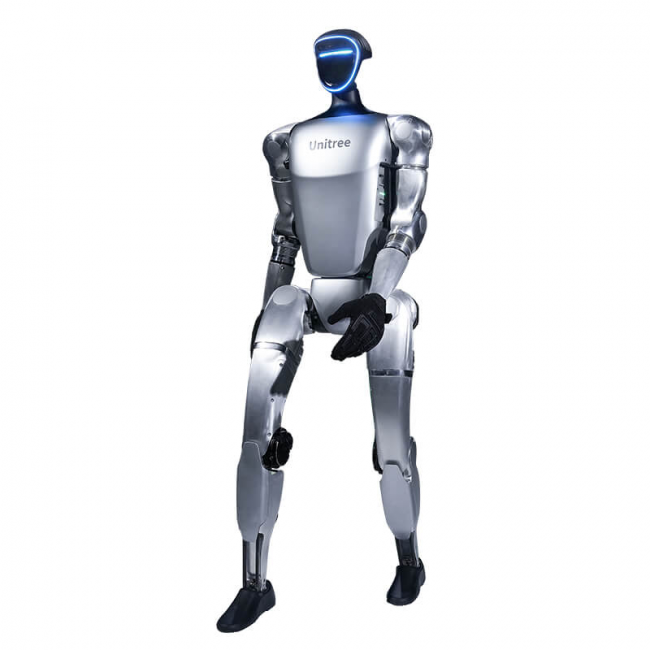
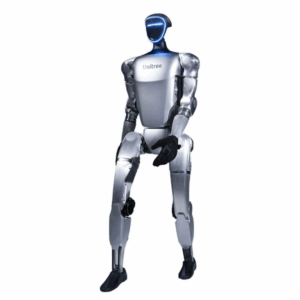
The Unitree G1 EDU U9 is a compact, foldable humanoid that stands approximately 1.32m tall. It is built with high-strength materials and industrial-grade joints, making it a robust platform for testing reinforcement learning, computer vision, and human-robot interaction.
Key Specifications: U9 Professional A
| Feature | Specification |
| Total Degrees of Freedom | 37 DoF (Increased from the base 23) |
| Hands | 2x Dex3-1 Tactile (3-finger dexterous hands) |
| Tactile Sensors | Integrated arrays (33 sensors per hand) |
| Onboard AI Compute | NVIDIA Jetson Orin NX (16GB) – 100 TOPS |
| Knee Torque | 120 N·m (High-torque EDU version) |
| Max Payload | ~3 kg (Arm) |
| Runtime | ~2 Hours (9000 mAh quick-release battery) |
Core Features
-
Tactile Manipulation: Unlike the base EDU models, the U9 is equipped with tactile sensor arrays in the fingers. This allows the robot to “feel” objects, enabling delicate grasping and advanced force-control manipulation that mimics human touch.
-
Advanced AI Integration: The built-in Jetson Orin module provides the 100 TOPS of computing power necessary for running real-time “System 2” reasoning, large language models (LLMs), and complex computer vision algorithms locally on the robot.
-
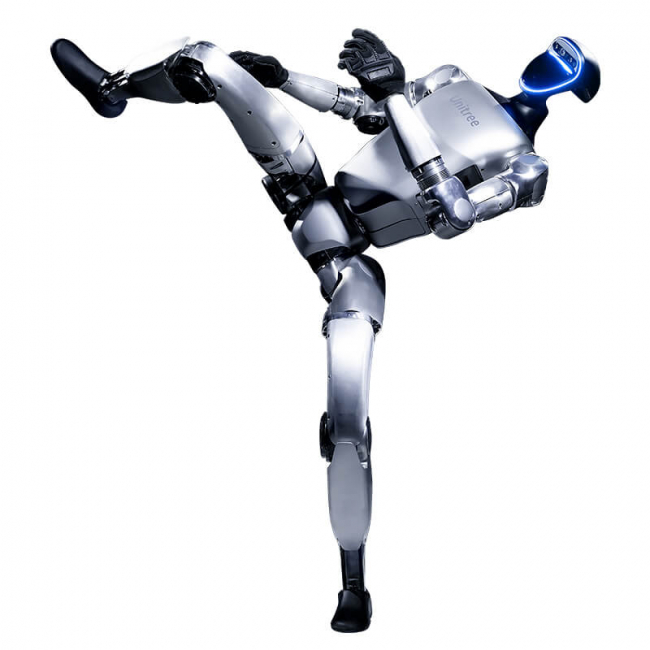
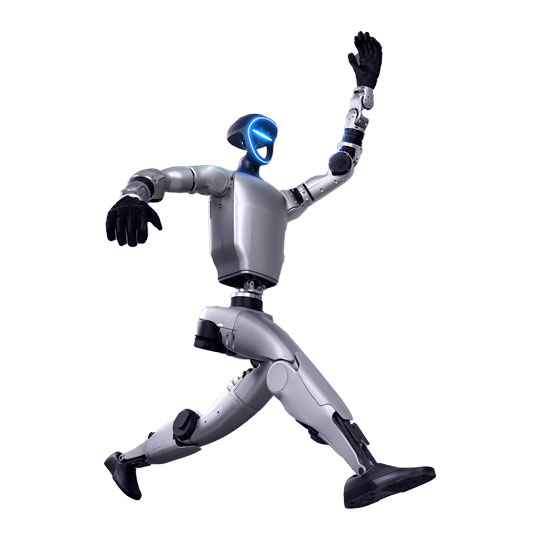
Kinematic Agility: With 37 active joints (including a multi-DOF waist and specialized wrists), the U9 can perform highly fluid, human-like movements. It features a unique foldable design, collapsing to just 69cm for easy transport.
-
Comprehensive Sensor Suite: It perceives the world via a 3D LiDAR (Livox Mid-360) for 360° mapping and an Intel RealSense D435i depth camera for front-facing visual perception.
Developer & Research Focus
The G1 EDU series is an “open” platform. It supports:
-
Secondary Development: Full access to high-level and low-level SDKs (C++/Python).
-
AI Training: Support for the UnifoLM (Unitree Robot Unified Large Model) and frameworks for imitation and reinforcement learning.
-
Communication: Dual-encoder systems on all joints, WiFi 6, and Bluetooth 5.2 ensure low-latency control and data feedback.
Use Cases
-
Embodied AI Research: Training robots to interact with physical environments using vision and touch.
-
Dextrous Manipulation Labs: Developing algorithms for tool use, assembly, and fine motor skills.
-
STEM & Higher Education: A standardized platform for universities to teach humanoid robotics at a professional scale.





Reviews
There are no reviews yet.